About Directional Overcurrent Relay
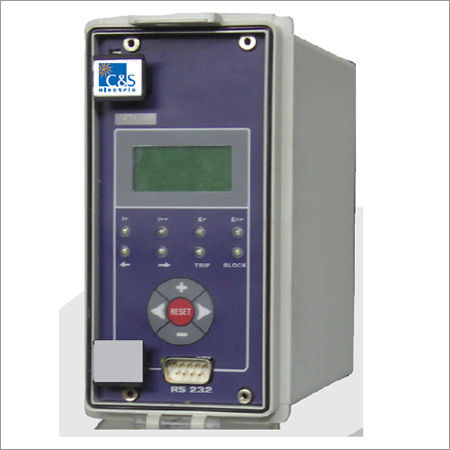
The application of powerful digital signal controller opens a new chapter for power protection systems. Because of their capabilities to process the measuring values digitally and to perform arithmetic and logical operations using digital signal processing algorithms the numeric protective relays are superior to the traditional digital devices. In addition, the numeric protective relays offer some additional advantages such as handling complex communication protocols and multiple protective functions. The numerical relay CSU1 has been designed as a universal three phase over-current and earth fault relay with directional/non-directional characteristics in phase and earth functions.
Advanced Power System ProtectionEngineered for safeguarding electrical power systems, this relay provides directional overcurrent protection for transformers, generators, and feeders. Its microprocessor-based technology ensures enhanced sensitivity and accurate fault detection, minimizing downtime and maximizing equipment reliability.
User-Friendly Interface and ConfigurationWith a clear LED digital display and intuitive controls, users can easily set time delays for both instantaneous and IDMT operation. Manual or automatic reset features offer operational flexibility, simplifying maintenance and event response for facility managers.
Robust Design for Versatile InstallationsEncased in a matte, grey & black housing with IP54 protection, this relay is suitable for demanding industrial environments. Its compact dimensions allow for seamless DIN rail or flush mounting, making it adaptable for a variety of switchgear panels and electrical enclosures.
FAQs of Directional Overcurrent Relay:
Q: How does the directional overcurrent relay with trip indicator enhance electrical power system safety?
A: This relay monitors current flow direction and magnitude, ensuring quick disconnection during overcurrent or short-circuit events. The trip indicator with LED status lights provides immediate fault notification, helping to prevent equipment damage by alerting operators to take timely action.
Q: What steps are involved in configuring the time settings for the relay?
A: To set the relay time, use the LED digital display and onboard controls. Select either Instantaneous or IDMT (Inverse Definite Minimum Time) tripping characteristics according to system requirements. Configuration is straightforward, supporting both manual and automatic resets as per operational preferences.
Q: When should this numerical digital relay be used in a power distribution system?
A: This relay is ideal for protecting key assets like feeders, transformers, and generators whenever directional overcurrent protection is necessary, especially in interconnected network applications where precise fault isolation is critical for system stability and safety.
Q: Where can the relay be installed within an electrical network?
A: The relay supports both DIN rail and flush mounting, allowing installation in a wide range of switchgear panels, control boards, and electrical enclosures. Its IP54 rating and compact form ensure reliable operation across industrial sites, substations, and utility environments.
Q: What benefits do the potential-free output contacts offer?
A: With 2 Normally Open and 2 Normally Closed (potential-free) contacts, the relay allows flexible integration with other devices, such as alarms or breakers, without introducing electrical interference, making it suitable for a variety of automation and monitoring applications.
Q: How is the relay powered and what are its input requirements?
A: The relay operates on an auxiliary supply of 80265 V AC/DC and can be connected to either 1A or 5A Secondary CT inputs. This flexibility makes it compatible with a wide range of protection and control systems typically found in Indian industrial installations.
Q: What is the process for resetting the relay after a trip event?
A: After a trip, the relay can be reset manually via front panel buttons or set to automatic reset mode as required. LED indicators provide status updates throughout the sequence, ensuring operators are informed of relay readiness and system conditions.


 Send Inquiry




 Send Inquiry
